SpaceX Goes Public
The Blockbuster IPO of the Century

SpaceX is planning to go public on June 12th at $135 per share, giving it a staggering valuation of $1.77 trillion and making it one of the most valuable public companies in the world. The IPO is expected to raise $75 billion, the biggest public offering in history.
But before I go any further: this is not investment advice. I did learn a valuable lesson in business school that I’m happy to share: buy low, sell high. Beyond that, you’re on your own!
Back to the IPO. What makes this deal fascinating isn’t just the size. It’s that SpaceX is no longer just a rocket company.
Yes, Falcon 9 dominates the global launch market, and Starship is still the most ambitious rocket ever built. But SpaceX has grown far beyond launch services. Starlink has become a massive communications business and the most profitable arm of SpaceX. The company has expanded into artificial intelligence by acquiring xAI and Grok this February. It is also investing heavily in chip manufacturing with its Terafab initiative. Elon’s latest plan is to build orbital data centers in space, which could potentially become the most valuable part of SpaceX.
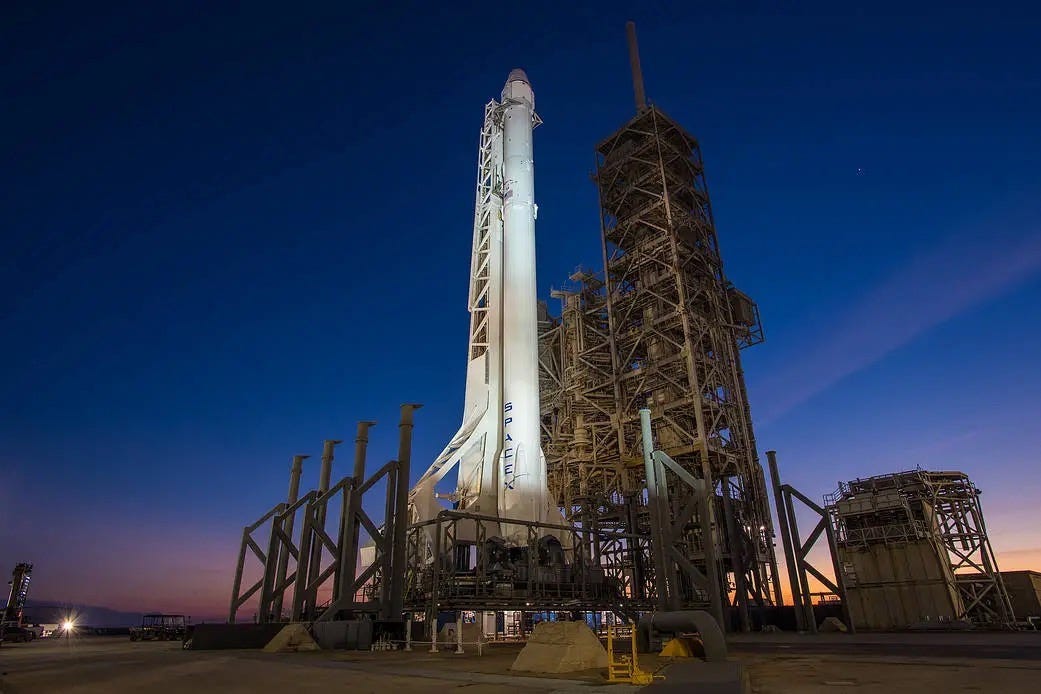
Falcon 9 on the Launch Pad
In other words, SpaceX wants to become the multi-domain company of the future, leading the global space, communications, data, and AI sectors.
That is a grand vision to say the least, but understanding the hard, cold numbers is necessary to evaluate this deal.
In 2025, SpaceX generated $18.7 billion in revenue while losing $4.9 billion. Starlink was profitable, but enormous investments in Starship and AI weighed on overall earnings. It’s worth noting that at its IPO valuation, SpaceX is worth an eye-popping 90 times annual revenue.
For comparison, most large public companies trade at a small fraction of that. Boeing and Exxon are around 2x, AT&T is 1.4x, and United Airlines is a relative bargain at 0.6x. Even high-growth technology firms rarely command such lofty multiples. To really dig under the financial hood, including a fascinating analysis of institutional vs retail investors, check out Bloomberg columnist Matt Levine’s excellent analysis of this blockbuster IPO.
But investors aren’t buying SpaceX for what it earns today. They’re buying what they believe it could become. Some may call this irrational exuberance. Others call it vision. This is where Elon Musk dominates the story.
Nobody has a better track record of turning seemingly impossible ideas into reality. Reusable rockets, electric vehicles, global satellite internet; each sounded unrealistic until they weren’t. Investors are betting that SpaceX can do it again.
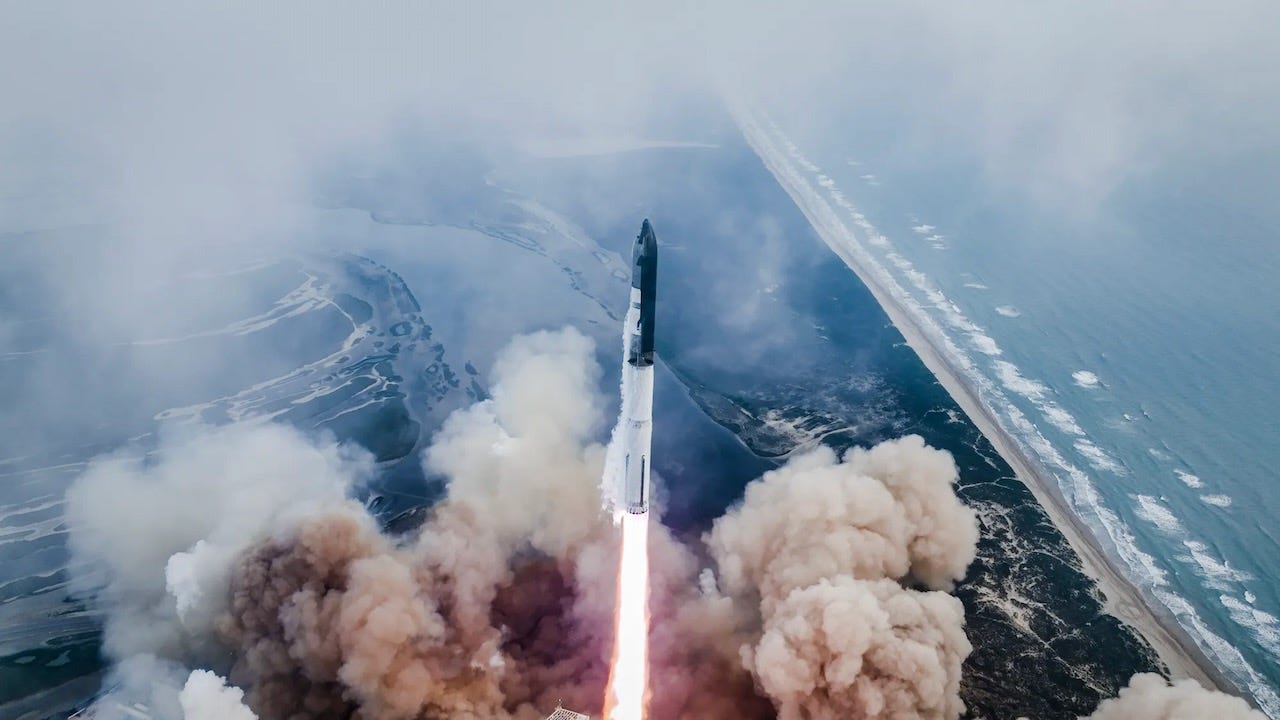
Starship Launch
Their launch business may continue to grow as demand for satellites increases with the rise of mega-constellations and Starship becomes operational. Starlink still has room to expand globally, although competition is coming from Amazon Leo, Europe, and China. The AI business could become a major driver of future value if Grok gains traction against rivals like ChatGPT, Claude, and Gemini. Elon’s controversial stint with DOGE potentially netted him a massive amount of US Government data, and data is the coin of the AI realm.
But the biggest prize may be orbital computing.
If Starship becomes operational and SpaceX is able to develop Terafab-enabled satellites that can function in the harsh thermal and radiation environment of outer space, they could deploy a vast network of up to a million computing satellites. This could create a data center ecosystem that avoids many of the energy, water, and permitting challenges faced on Earth. It could also meet the massive computing requirements that modern AI requires at a lower cost than its terrestrial competitors. It’s a bold idea. And a massively expensive one. Success could mean that SpaceX would become profitable beyond imagination. And failure might mean that the IPO was, shall we say, overpriced.
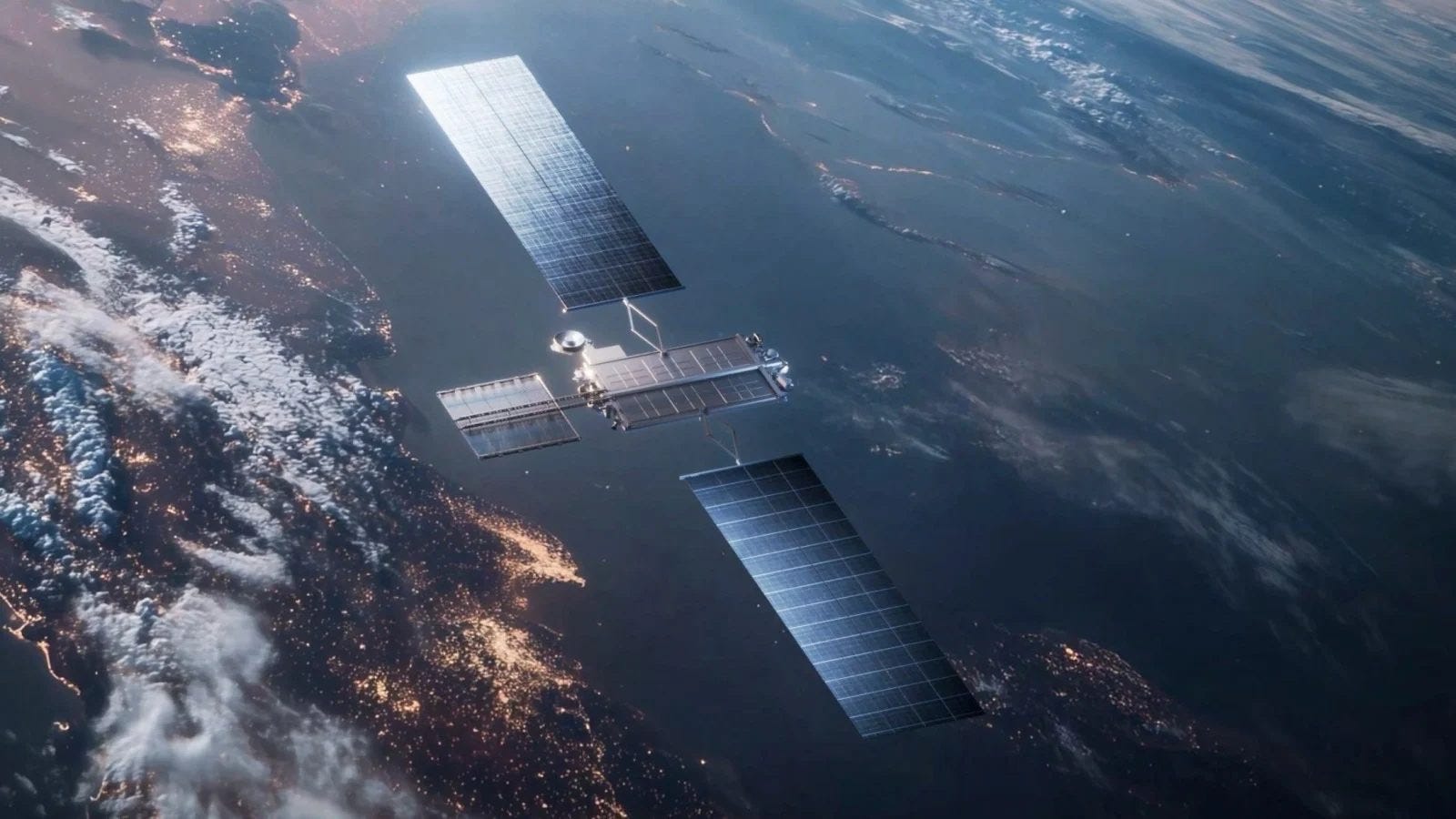
“AI Sat Mini” Orbital Computing Satellite
In any case, SpaceX faces plenty of risks. Launch, internet, and AI markets will eventually mature; the hockey stick won’t last forever. Competition will be fierce from other private rocket companies, AI giants, and Earth-bound data centers. Technical problems will always lurk. Massive satellite constellations for Starlink and AI data centers raise serious concerns about space debris in Earth orbit.
Ultimately the foundation of this whole deal is Elon himself.
SpaceX’s valuation has always been based largely on confidence in Musk’s vision and leadership. One issue that raised many eyebrows is the extraordinary level of voting control that Elon will retain after the IPO. If his decisions prove correct, investors may be rewarded. If not, there will be few checks on his authority which could lead to buyer’s remorse.
Finally, there’s politics.
SpaceX operates in heavily regulated industries and depends on government relationships, and Musk has a friend in Donald Trump today. But political winds change. There’s a midterm election in less than five months and a new presidential administration in two and a half years. Elon is already the world’s richest man, and he’s poised to become humanity’s first trillionaire, which could lead to backlash from the general public. The bottom line is that SpaceX may not always enjoy such friendly political and public goodwill in the future.
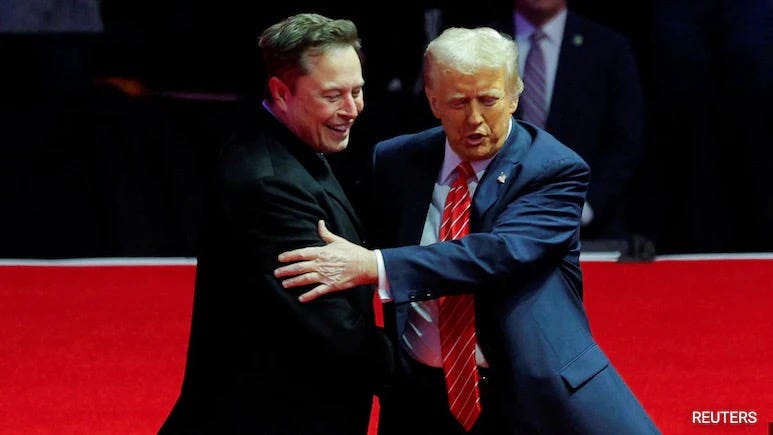
This IPO will no doubt generate a ton of buzz, and at the end of the day markets are often driven more by emotion that by spreadsheets.
Whether SpaceX ultimately justifies its $135 price remains to be seen. One thing is certain: this is not just another IPO, it’s a public referendum on one of the most consequential business leaders in history.
And if you do decide to jump in, remember my business school advice:
Buy low. Sell high.